
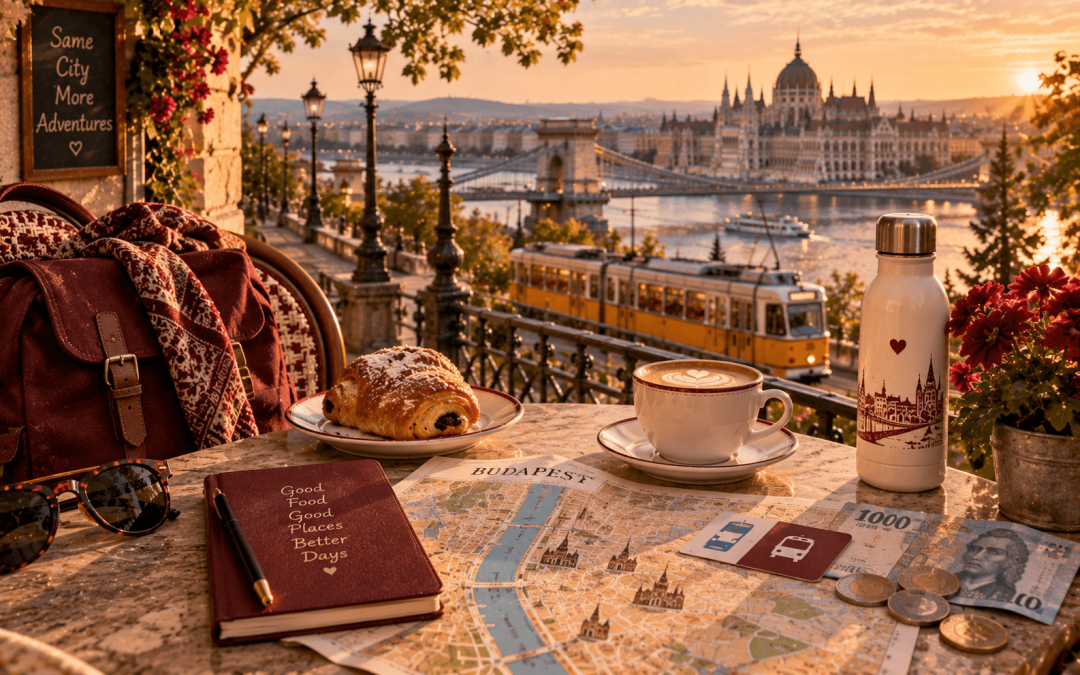
Budapest is one of those cities where I can spend enthusiastically if I want to — rooftop cocktails, thermal baths and elaborate cakes are extremely persuasive — but I can also have a brilliant trip without treating my bank account as an emergency fund.
Planning budget Budapest is mostly about knowing where spending actually improves the experience. Public transport is excellent, many of the city’s most memorable views cost nothing, and eating one street away from the busiest tourist areas can make a noticeable difference.
So no, enjoying Budapest cheaply doesn’t mean surviving entirely on supermarket sandwiches. Although I have nothing against an emergency pastry.
Money-Saving Tips for Budapest
My basic rule for budget travel in Budapest is simple: spend on the experiences I genuinely care about and save on everything else.
I walk when possible, use public transport instead of taxis, eat lunch away from the busiest squares and choose free viewpoints alongside paid attractions.
Those small decisions leave more room in my budget for the things Budapest does particularly well — whether that’s a thermal bath, museum, Danube experience or suspiciously beautiful dessert.
Use Budapest’s Public Transport
Budapest’s metro, tram and bus network is one of my easiest money-saving tools.
A regular BKK single ticket currently costs 500 HUF, while a 30-minute ticket is 600 HUF and a 90-minute ticket costs 850 HUF. If I’m sightseeing heavily, I compare those with the current 24-hour travelcard at 2,750 HUF and 72-hour travelcard at 5,750 HUF.
The travelcards allow unlimited journeys during their validity period, so they can quickly become useful when my itinerary involves crossing between Buda and Pest several times.
I also download BudapestGO for journey planning and digital tickets. Pay&GO is available across all four metro lines in 2026, allowing a bank card or compatible smart device to purchase and validate a single ticket with one tap.
One important exception is the 100E Airport Express, which uses a special airport fare rather than an ordinary single ticket.
Walk More — Budapest Rewards It
Central Budapest is wonderfully walkable, and some of my favourite routes cost precisely zero forints.
I can walk from St. Stephen’s Basilica towards the Danube, continue past Parliament and the Shoes on the Danube Bank, then cross the river towards Buda.
Another excellent route takes me through the Castle District, where the historic streets and panoramic views are attractions in themselves.
Walking also solves one of my recurring travel problems: accidentally eating several Hungarian pastries in one afternoon.
Enjoy Budapest’s Free Attractions
A cheap Budapest itinerary doesn’t need to feel like I’m constantly avoiding the interesting places.
Some of the city’s greatest experiences happen outdoors. I can admire Parliament from across the Danube, wander through Heroes’ Square, explore Margaret Island, walk around City Park and enjoy the historic atmosphere of the Buda Castle District without buying an admission ticket simply to be in those areas.
The Danube banks and Buda Castle District are part of Budapest’s UNESCO World Heritage landscape, so one of the city’s grandest sightseeing experiences is essentially an extremely impressive walk.
I also save sunset for a viewpoint rather than automatically paying for a rooftop. Budapest looks excellent from street level too.
Eat Like a Budget-Smart Traveler
Food is where my budget can either behave beautifully or disappear before dinner.
I avoid assuming that every meal needs to happen beside a major attraction. Restaurants directly around the busiest tourist areas often charge more for their location.
Instead, I explore side streets and neighbourhoods beyond the most obvious squares. Bakeries are useful for inexpensive breakfasts, while casual Hungarian eateries can be excellent for a filling lunch.
Markets and supermarkets also help when I want fruit, snacks, drinks or picnic supplies.
My favourite strategy is to make lunch the more substantial meal and keep dinner casual. I still get to enjoy Hungarian cooking without turning every evening into a financial event.
Save Money on Drinking Water
This is a tiny tip, but small expenses become surprisingly ambitious over several days.
I carry a reusable bottle rather than constantly buying bottled water. Budapest’s tap water is safe to drink, so I can refill at my accommodation before heading out.
It also means I have water available when climbing around Buda in summer, which is much preferable to discovering that my budget plan has accidentally become a dehydration plan.
Choose Accommodation in the Right Location
The cheapest room isn’t automatically the cheapest trip.
If accommodation is far outside central Budapest, I may spend more time and money travelling every day. I prefer somewhere within easy walking distance of major attractions or close to a metro or tram line.
District V is extremely central, while parts of District VI, VII, VIII and IX can also offer convenient bases depending on the exact location.
For backpacking, hostels provide obvious savings. Couples can often find better value by comparing boutique rooms and apartments with large international hotels rather than automatically choosing the cheapest listing.
Be Selective with Paid Attractions
I don’t try to visit every attraction with an entrance fee. That approach is expensive and, after museum number five, occasionally exhausting.
Instead, I choose two or three paid experiences that genuinely matter to me. Perhaps that’s Parliament, a thermal bath and the Hungarian National Gallery. Everything else can be built around free neighbourhood walks, parks, markets and viewpoints.
I also compare individual admission prices with city-card options rather than assuming a sightseeing pass automatically saves money. A pass only represents good value if I actually use the included attractions.
Visit Thermal Baths Strategically
I wouldn’t tell a first-time visitor to skip Budapest’s thermal baths simply to save money. Sometimes budgeting means spending deliberately rather than spending nothing.
If visiting a bath is high on my list, I make it one of the trip’s main paid experiences and reduce spending elsewhere that day.
I check official ticket prices before visiting and bring anything the bath allows me to bring myself rather than discovering I need several unexpected extras once inside.
Suddenly, that evening supermarket picnic overlooking the Danube feels less like economising and more like excellent planning.
My Budapest Budget Checklist
- Walk central neighbourhoods instead of automatically using transport.
- Compare BKK tickets and travelcards based on how many journeys you’ll actually make.
- Eat away from major tourist squares when possible.
- Carry a refillable water bottle and avoid unnecessary small purchases.
- Mix free and paid attractions instead of filling every day with tickets.
- Use markets and bakeries for inexpensive breakfasts, snacks and picnic supplies.
- Choose accommodation strategically so you don’t spend your savings commuting.
Can You Really Visit Budapest on a Budget?
Absolutely. What I like about budget Budapest is that saving money doesn’t automatically mean missing the city.
The Danube still sparkles for free. Parliament doesn’t charge me to admire it from Buda. Historic streets, bridges, parks and neighbourhoods provide hours of sightseeing without an admission ticket.
I would choose a few memorable paid experiences, use Budapest’s excellent public transport intelligently and spend the rest of my time walking, eating well and discovering the city at street level.
Set your daily budget, save this guide and discover Giselle’s boutique stays in central Budapest — because a smart location can help you spend less time commuting and more time enjoying the city.

Giselle Budapest Team
At Giselle, every stay is shaped around comfort, character and care. Our boutique hotels are located in the heart of Budapest, offering serene interiors, antique details and a welcoming sense of calm. Whether you’re visiting for culture, leisure or a quiet escpae, Giselle invites you to settle in and enjoy the city at your own pace.