
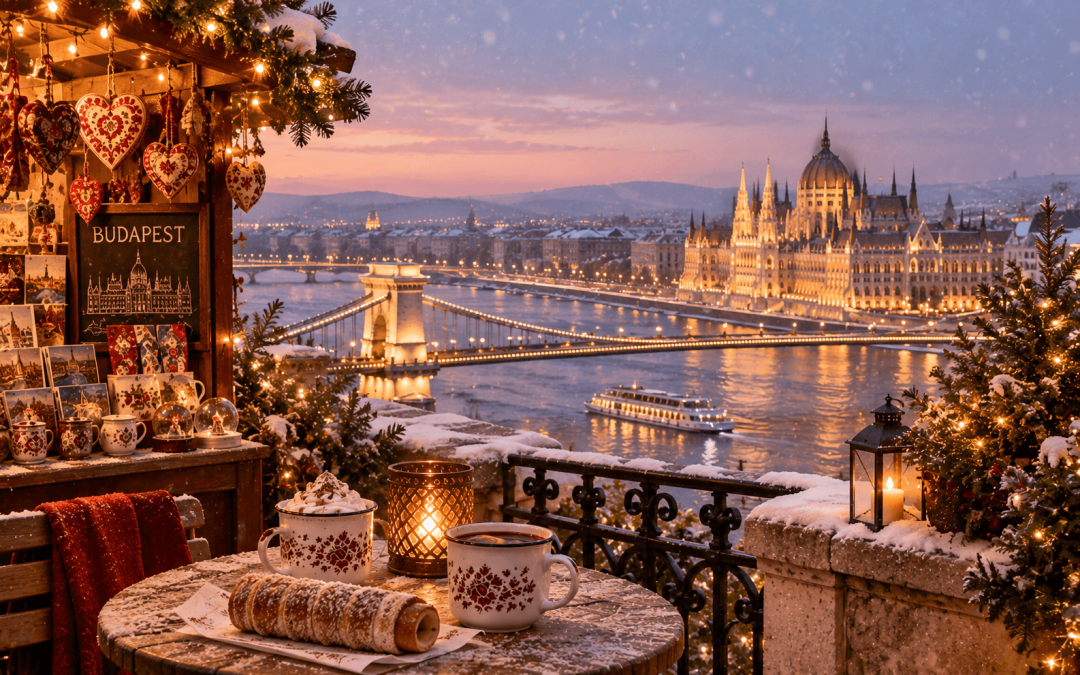
Budapest knows how to do winter properly. The temperature drops, lights appear across the city, steam rises dramatically from thermal pools and suddenly ordering another hot chocolate feels less like indulgence and more like sensible preparation for the weather.
Visiting Budapest in winter also reveals a different personality. The busy summer terraces become cosy cafés, evenings arrive early enough to see Parliament illuminated before dinner, and December brings Christmas markets, festive lights and the smell of cinnamon and kürtőskalács through the city centre.
Yes, it gets cold. Sometimes very cold. But with the right coat and a strategic thermal-bath schedule, winter can be one of my favourite times to explore Budapest.
Winter Travel Tips
Budapest’s winter generally stretches from December through February, although chilly weather can arrive earlier and linger into March. January is typically the coldest month, with average temperatures hovering around freezing and nights regularly dropping below 0°C.
Does that mean guaranteed snow in Budapest? Unfortunately, no. Snowfall is possible, but I would treat a white Budapest as a beautiful bonus rather than something to build an entire trip around.
I pack layers, gloves, a warm coat and shoes with decent grip. The last item becomes particularly important when picturesque cobblestones decide to become tiny ice-skating rinks.
Soak in Budapest’s Thermal Baths
If there is one argument for visiting Budapest when it’s cold, it is this: thermal baths.
Few winter experiences compare with sitting in warm thermal water while cold air hangs above the pool. It feels slightly ridiculous for the first thirty seconds and absolutely wonderful for every minute afterwards.
Széchenyi Thermal Bath is the classic choice. Its large outdoor pools make the contrast between cold winter air and warm water especially memorable, while indoor pools and treatment areas provide somewhere to retreat when I’ve finally had enough fresh air.
Rudas Thermal Bath offers a different atmosphere, combining historic Ottoman-era bathing with modern wellness facilities and a rooftop pool overlooking the Danube.
I recommend booking ahead during weekends and the Christmas/New Year period, when Budapest becomes particularly busy.
Explore Budapest’s Christmas Markets
Come in late November or December and Christmas in Budapest becomes impossible to ignore.
The two most famous festive areas are traditionally Vörösmarty Square and the market around St. Stephen’s Basilica. Expect wooden stalls, Hungarian food, hot drinks, handmade gifts and enough festive lighting to make even my phone photographs look respectable.
The Advent Basilica market is especially atmospheric after dark, when the illuminated basilica becomes the backdrop to the festivities.
I like visiting once during daylight to browse the stalls properly and returning after sunset for the lights and atmosphere. Opening dates and programmes change each year, so check the official seasonal schedule before travelling.
Go Ice Skating at City Park
Budapest has a rather spectacular answer to winter exercise.
The City Park Ice Rink, beside Vajdahunyad Castle, is one of Europe’s best-known outdoor skating rinks. In winter, the enormous rink creates an almost absurdly photogenic scene, with the castle behind it and Heroes’ Square nearby.
Skates can be rented on site, so I don’t need to sacrifice half my suitcase to sporting equipment.
And if my skating style is less “elegant winter romance” and more “person negotiating urgently with gravity,” watching from the side with a warm drink is also entirely acceptable.
See Budapest Illuminated After Dark
The early winter sunset has one major advantage: Budapest starts glowing ridiculously early.
Parliament, Buda Castle, Matthias Church and the bridges along the Danube are illuminated after dark, transforming the riverfront into one of Europe’s loveliest evening walks.
I like starting around the Chain Bridge, walking along the Danube and stopping whenever my fingers are warm enough to operate a camera.
Fisherman’s Bastion is another favourite. The terraces overlook Parliament and central Pest, and winter evenings can feel wonderfully atmospheric once the busiest daytime crowds disappear.
Escape the Cold in Budapest’s Historic Cafés
At some point, sightseeing stops being cultural enrichment and becomes an urgent search for central heating.
Fortunately, Budapest has spent generations preparing for exactly this situation.
Historic coffee houses such as Centrál Grand Café and the spectacular New York Café provide warm interiors, coffee and desserts in suitably grand surroundings. Modern specialty cafés offer a more relaxed alternative across central Pest.
This is also the season when I enthusiastically embrace Hungarian cakes. Dobos torte, Esterházy cake or almost anything involving chocolate suddenly feels medically necessary after two hours outside.
Visit Budapest’s Museums and Indoor Attractions
Winter is a perfect excuse to explore the attractions I might rush past during sunny weather.
The Hungarian National Gallery inside Buda Castle is an obvious choice for art lovers. The Museum of Fine Arts beside Heroes’ Square works beautifully with a City Park itinerary, while the Hungarian National Museum offers a deeper introduction to the country’s history.
Parliament is another excellent indoor option. Guided visits take you inside one of Budapest’s most spectacular buildings, but tickets can sell out, so advance planning is wise.
What Should I Eat in Budapest in Winter?
Winter is when Hungarian comfort food truly makes sense.
- Goulash: warm, hearty and exactly what I want after walking in cold weather.
- Lángos: fried dough traditionally topped with sour cream and cheese.
- Kürtőskalács: chimney cake, particularly irresistible when served warm.
- Hungarian stews: excellent cold-weather fuel.
- Hot chocolate and coffee: my preferred excuse for investigating Budapest’s café culture.
Is Budapest Worth Visiting in Winter?
Absolutely — as long as I arrive expecting winter rather than secretly hoping for July.
There are fewer daylight hours, temperatures can drop below freezing and snow is never guaranteed. In exchange, I get thermal pools steaming in cold air, festive markets in December, atmospheric cafés, illuminated architecture and a city that often feels more intimate than during peak summer.
January and February are particularly appealing if Christmas markets aren’t essential to your trip. The festive crowds have gone, yet the baths, museums, cafés and major sights remain.
My Essential Budapest Winter Packing List
- A proper winter coat: fashionable optimism is not insulation.
- Layers: useful when moving between freezing streets and very warm interiors.
- Gloves and a scarf: especially for evening walks beside the Danube.
- Comfortable waterproof shoes: cold or wet feet can ruin even the prettiest itinerary.
- Swimwear: forgetting it in Europe’s thermal-bath capital would be unfortunate.
Ready for Budapest in Winter?
Budapest in winter isn’t simply a colder version of the summer city. It has its own rhythm: steaming baths in the morning, museums and cafés in the afternoon, illuminated Danube views after sunset and, during Advent, Christmas markets glowing in the city centre.
I would embrace the season rather than fight it. Dress warmly, schedule plenty of indoor stops and reward every ambitious winter walk with something hot and delicious.
Pack your coat, bring your swimsuit and start planning your winter escape — then discover Giselle’s boutique stays in central Budapest for a warm and stylish base in the heart of the city.

Giselle Budapest Team
At Giselle, every stay is shaped around comfort, character and care. Our boutique hotels are located in the heart of Budapest, offering serene interiors, antique details and a welcoming sense of calm. Whether you’re visiting for culture, leisure or a quiet escpae, Giselle invites you to settle in and enjoy the city at your own pace.